Meet the Artist
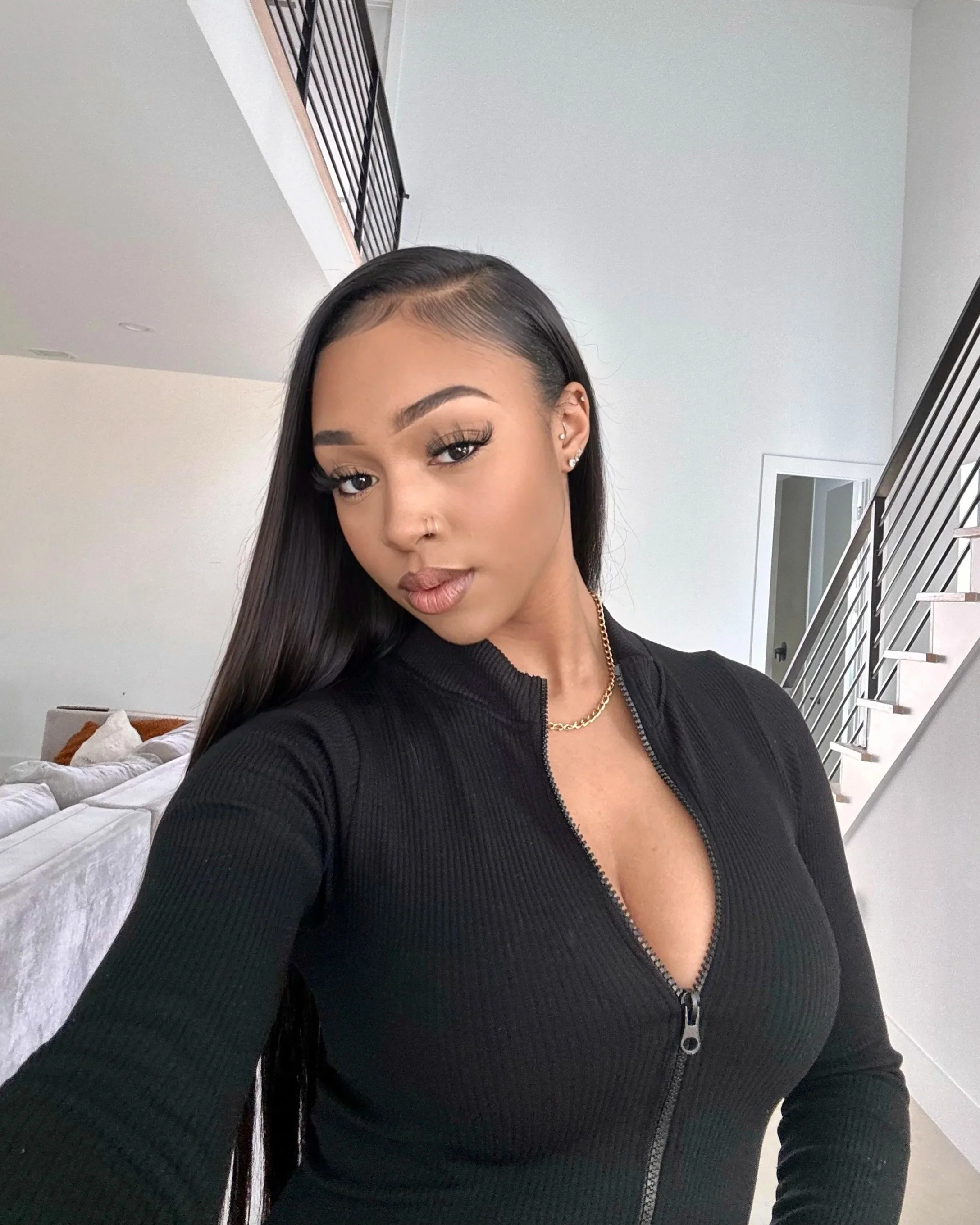
Jo Majette
Multidisciplinary Artist · Founder of JoVincii Studios
Portraiture · Blind Contour · Mixed Media · Installation · Participatory Art
Understanding the muse.
About Jo Majette
I have been making things for as long as I have been able to hold a pencil.
Before I understood what it meant to be an artist, I understood the instinct to create: to look closely, imagine something beyond what was already there, and use my hands to bring it into the world. Drawing was one of my earliest languages. As a child, I could sit with a pencil and disappear into an image, studying faces, expressions, shadows, and small details that other people might overlook. Around eight to ten years old, that curiosity expanded into sculpture after my grandmother bought me my first sculpting materials. She helped teach me that creativity could be more than a pastime. It could be a form of prayer, a way of processing life, and a way of caring for people.
That understanding has followed me through every version of myself.
I am Jourey “Jo” Majette-Hatton, a Black multidisciplinary artist, creative entrepreneur, storyteller, and founder of JoVincii Studios. I was born and raised in Hampton Roads, Virginia, and my work is deeply rooted in the people, histories, contradictions, and cultural language of this region. I create across portraiture, painting, graphite, blind contour drawing, mixed media, textiles, beadwork, sculpture, installation, photography, modeling, creative direction, digital storytelling, and community arts programming.
Long before I had formal language for a multidisciplinary practice, I was already moving between mediums. By eight years old, I was designing full candy-table experiences, creating sweets, coordinating colors and presentation, and thinking about how individual objects could work together to transform a space. Those early projects became some of my first experiences with entrepreneurship, event design, installation, and visual storytelling. They taught me that creativity was not limited to something framed on a wall. It could be edible, wearable, temporary, immersive, celebratory, or built specifically for another person.
In high school, a teacher recognized the depth of my drawing ability and encouraged me beyond the traditional sequence of introductory art courses. I advanced directly into AP Studio Art and earned a score of four on the 2017 AP examination. I later attended the Virginia Governor’s School for the Arts, where I continued developing across visual disciplines. I participated in the school’s 2018 fashion show and was selected for a photography exhibition. During those years, I explored portraiture, design, fashion, photography, and the relationship between how people see themselves and how they are represented.
JoVincii Studios formally began in 2016, but its foundation had been developing throughout my childhood. The name reflects the range I have always carried: the desire to draw, paint, build, design, experiment, study, and resist being reduced to one medium or one identity. What began through commissioned portraits, custom creations, sweets, and other creative work also became a way to support myself through college. Over time, JoVincii Studios has grown from a service-based creative business into the home of my larger artistic practice and long-term community vision.
My academic and professional path did not move in a straight line away from art. Instead, it gave me another set of tools with which to understand it.
I earned a Bachelor of Science in Biomedical Sciences from Old Dominion University. While standing as an ambassador of the Old Dominion University College of Sciences, my scientific education strengthened my fascination with anatomy, material behavior, systems, memory, perception, and the physical ways people carry their experiences. I also trained and worked in nuclear radiological controls and health physics, operating in highly technical environments where observation, documentation, precision, safety, repetition, and attention to invisible forces were essential.
That part of my life may appear separate from my artwork, but it is embedded in how I create. Science taught me to investigate. Technical work taught me to respect process. Radiological controls taught me that something does not have to be immediately visible to be present, measurable, consequential, or worthy of care. My artwork often begins in that same space, with the histories, emotions, physical realities, family patterns, and social structures that can shape a life even when they cannot be easily seen.
My foundation as a visual artist is rooted in detailed graphite and acrylic portraiture. I have long been drawn to Black faces, not as generic subjects, but as complete people carrying beauty, humor, labor, grief, contradiction, history, softness, power, and interior life. My portraits are acts of attention. They ask what becomes visible when a person is observed with care rather than consumed as an image.
My work has included intimate family portraits, cultural figures, public personalities, commissioned subjects, and larger explorations of Black identity and memory. Through the developing Commonwealth Collection, I am turning that attention toward people connected to Virginia, examining the visual and cultural identities that emerge from the Commonwealth. The collection allows me to think about place, celebrity, local history, ownership, influence, and what it means to document people through the perspective of an artist who is also from here.
As my technical ability developed, I also began searching for freedom from perfection. Blind-contour and continuous-line drawing gave me a new visual language. Instead of repeatedly correcting an image, I could remain present with the subject, allow the line to move intuitively, and accept evidence of the process. The drawings were not failures of realism. They were records of attention.
That exploration grew into LIMITS: Leaving Intuitive Marks Including Thoughtful Stories, my first flagship body of work and the recipient of a Virginia Beach Cultural Affairs Individual Artist Support Grant. LIMITS investigates the physical, emotional, inherited, social, and self-imposed boundaries that shape how people understand themselves. Through continuous-line portraiture, storytelling, public participation, painting, tactile work, and installation, I ask what happens when control is interrupted and a person must create within a constraint or push against it.
One part of the project, Contour Commons, invites community members to create and title one-line self-portraits that can be assembled into a collective, evolving artwork. Other elements include consent-based portrait sessions paired with brief personal stories, dimensional and tactile pieces, raised lines, textures, embedded braille, audio components, captioned documentation, and accessible ways of encountering the work beyond sight alone.
Accessibility is not an afterthought within my practice. I am interested in what art can become when it is designed with different bodies, senses, communication styles, and ways of processing information in mind from the beginning. My developing accessibility work includes tactile companions, textured materials, raised-line drawings, braille, audio description, guided storytelling, large-print information, and screen-reader-conscious digital presentation. I want people to do more than stand outside an artwork and observe it. I want them to have multiple ways to enter it.
My current studio practice is also becoming increasingly sculptural and spatial. I am developing suspended textile installations composed of dense strands, rayon chainette, hand-beaded elements, dowels, inherited materials, and veil-like forms. These works move between softness and weight, concealment and exposure, separation and connection. Some can be approached from multiple sides or physically moved through, allowing the viewer’s body to become part of the encounter. The slowness and repetition of cutting, arranging, knotting, threading, and beading transform labor itself into a form of remembrance.
Family memory is one of the deepest roots of my work. My ancestral pieces examine inheritance not only as property or genetics, but as gesture, language, silence, domestic labor, survival, belief, grief, limitation, and the roles people are expected to carry.
Works including Inheritance, Kept, and Straight honor members of my maternal family while questioning the language through which their lives are remembered. My great-grandmother lived to ninety-five and spent her life as a homemaker, carrying forms of labor and resilience that were rarely formally documented. My grandfather was a Purple Heart veteran whose words, including the question, “Do you know your limits?”, now live differently inside the work. These pieces do not attempt to turn my relatives into simple symbols. They hold the complexity of loving people, losing them, inheriting from them, and trying to understand what must be preserved, transformed, or released.
Grief has made my artistic questions more urgent. I have experienced losses that changed the structure of my life and my understanding of memory. Art has become one of the places where I can hold what does not resolve neatly. I am interested in the objects people leave behind, the stories families repeat, the histories that are never written down, and the physical ways absence remains present.
My creative practice extends beyond the studio. I have experience in modeling, pageantry, content creation, visual communication, event development, and creative direction. In 2025, I represented Norfolk as Miss Black Norfolk, an experience that allowed me to bring together public presence, storytelling, advocacy, beauty, performance, and cultural representation. In 2026, I was invited to participate in the Virginia Museum of Contemporary Art’s Monster Drawing Rally, creating original work in a live public setting.
I am also developing workshops and community activations with libraries, schools, nonprofits, and therapeutic organizations. My programming uses line drawing, self-portraiture, storytelling, collaborative installation, and tactile experimentation to help participants create without needing traditional artistic training. Each session is designed as a complete experience in which people can make something meaningful, contribute to a collective work, and encounter creativity as a tool for reflection rather than a test of technical perfection.
Outside of my independent practice, I have worked in direct support settings serving people with intellectual and developmental disabilities. That experience, along with my own neurodivergent perspective and my family’s relationship to disability, continues to shape how I think about communication, autonomy, sensory experience, dignity, and genuine inclusion.
I do not consider myself an artist who happens to have done many unrelated things. I consider the range itself part of my practice.
The child sculpting at the table, the teenager designing candy displays, the Governor’s School student studying photography and fashion, the biomedical scientist, the radiological controls professional, the model, the pageant titleholder, the baker, the portrait artist, the installation builder, and the community facilitator are not separate people. They are all present in the way I observe, research, construct, document, and tell stories.
Today, I create publicly as Jo Majette through JoVincii Studios, building a practice that connects art, science, ancestry, accessibility, and community. I am working toward larger exhibitions, public installations, artist residencies, collaborative programming, and permanent community-centered works. I also envision expanding JoVincii Studios through a nonprofit structure that can support scholarships, creative education, residencies, accessible arts experiences, and meaningful opportunities for emerging artists and young people.
Ultimately, I want to build more than a collection of objects. I want to build an ecosystem in which art can preserve stories, make complex experiences visible, return resources to communities, and create room for people who are often expected to adapt themselves before they are allowed to participate.
My work begins with a line, but the line is never only a line. It can become a face, a memory, a boundary, a strand, a family tree, a scientific observation, a record of movement, or a path back to something that was nearly forgotten.
I believe healing happens at the root.
My practice is my way of finding it.
-Jo Majette <3.
Contact us
Interested in working together? Fill out some info and we will be in touch shortly. We can’t wait to hear from you!